Graded from Flawless (FL) to Included (I3). The fewer the inclusions, the higher the clarity grade
Cut determines how well a diamond’s facets interact with light, it is the most critical factor influencing sparkle. It governs how light is captured, reflected, and dispersed into brilliance. Diamond cut is not the shape, it is the quality of the craftmanship, which the results depend on the cutter’s skill and precision. The GIA / IGI grades diamond cut from Excellent to Poor based on proportions that maximize light performance. An Excellent cut diamond acts like a perfect mirror, reflecting nearly all light back to the eye for maximum brilliance. A Poor cut, however, allows light to leak out from the bottom, making the stone appear dull and lifeless, even with high color and clarity.
Diamond color refers to the absence of color in a white or colorless diamond, graded on a scale from D (completely colorless) to Z (yellow/brown tint) on a standardized scale. Colorless diamonds being the rarest and most valuable in the “white diamond” range, the less body color a diamond has, the higher its color grade, rarity, and typically, its price. This is because a truly colorless diamond allows more light to pass through it, resulting in greater brilliance and fire.
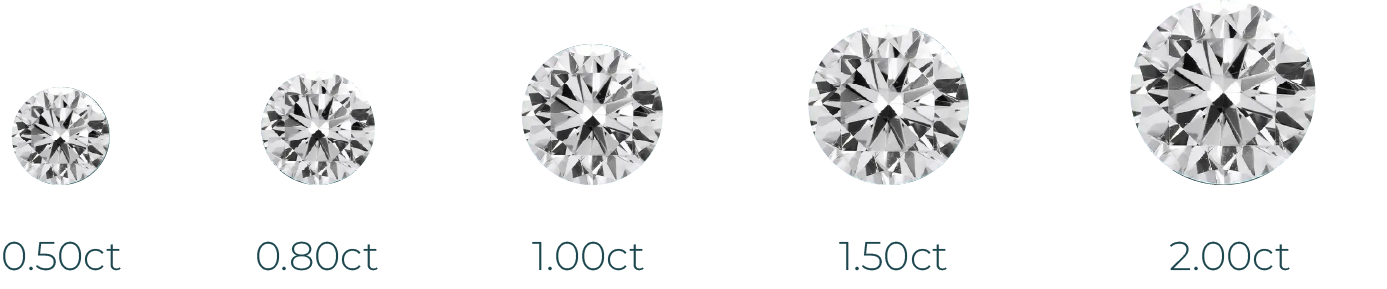
Carat is the unit of measurement for a diamond’s weight (one carat equals to 0.2grams or 200 milligrams). Carat measures weight, not physical size. Two diamonds of the same carat can look very different depending on the cut & shape.
At Eternity, we help you balance carat with cut, colour, and clarity – ensuring your diamond shines at any size.
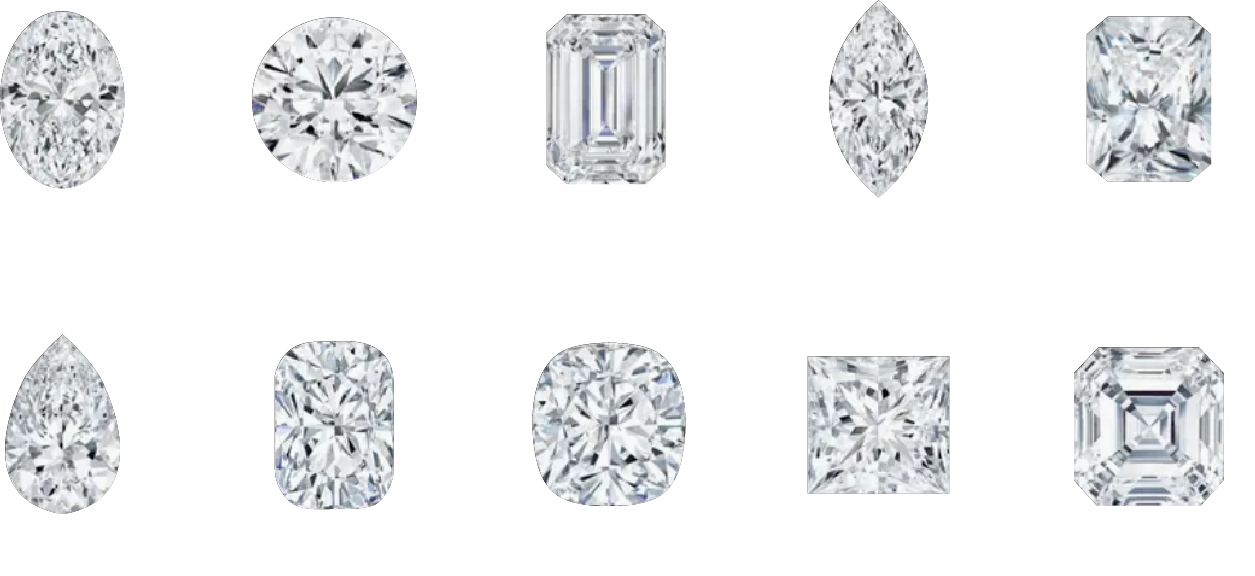
A diamond’s shape is its face-up silhouette, when viewing a diamond from the top, its overall outline and form is called the shape. This is not the same as the cut, which refers to the arrangement, pattern & quality of its angled surfaces. The classic round brilliant is the most popular shape, while any non-round shape such as oval, pear, marquise, cushion, radiant, emerald is considered fancy shape.